ALL PRODUCTS
- Solar Panel
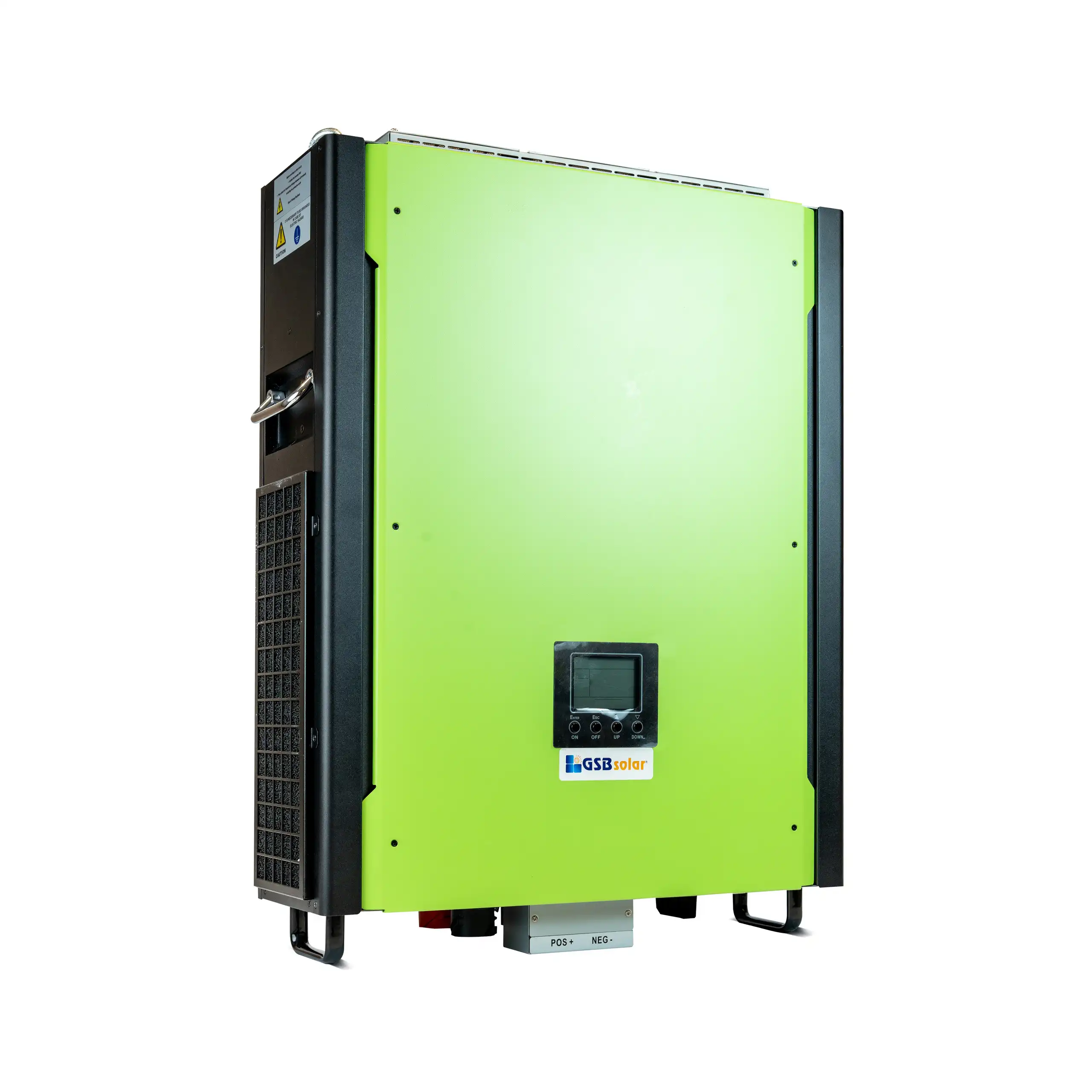
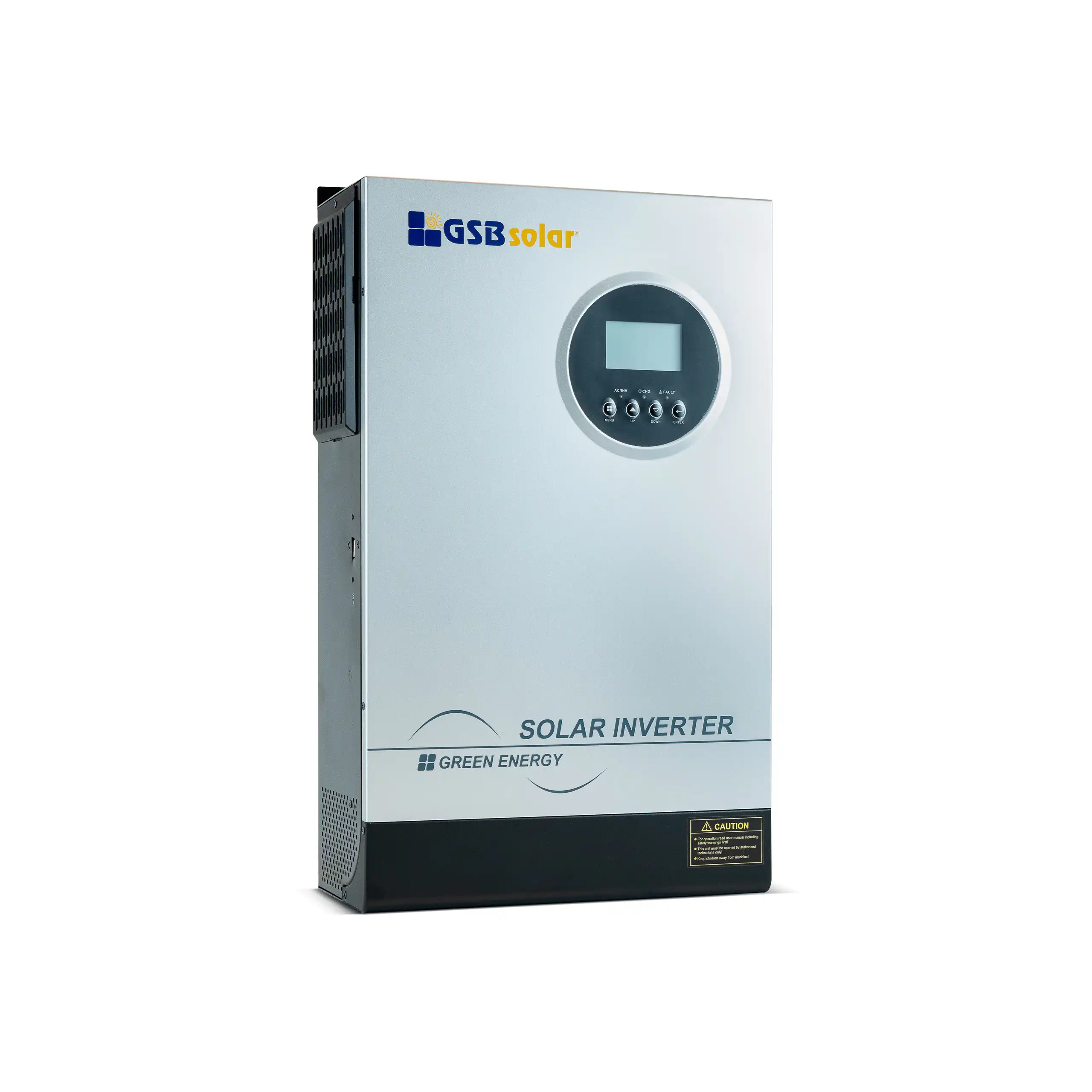
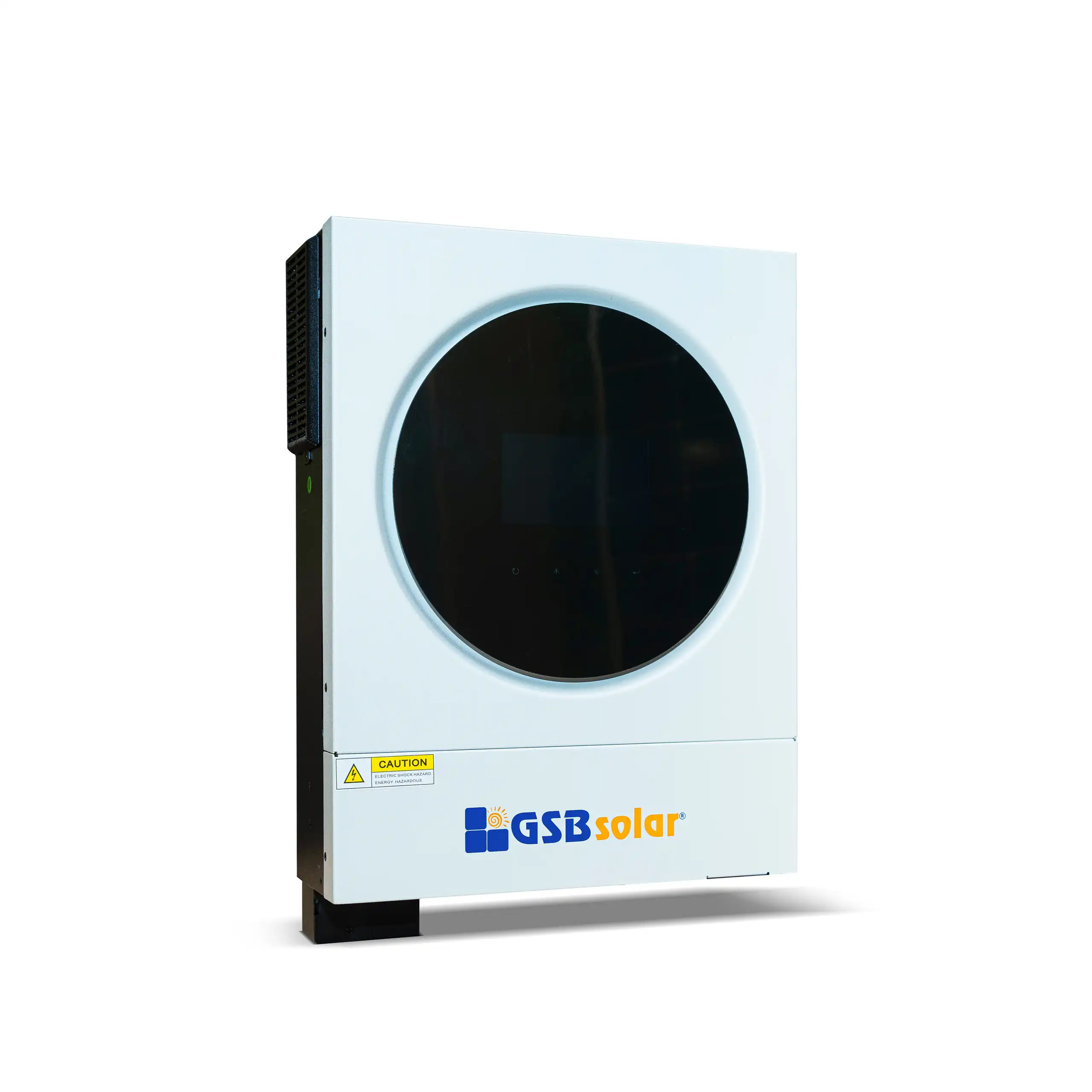
- Hybrid Inverter
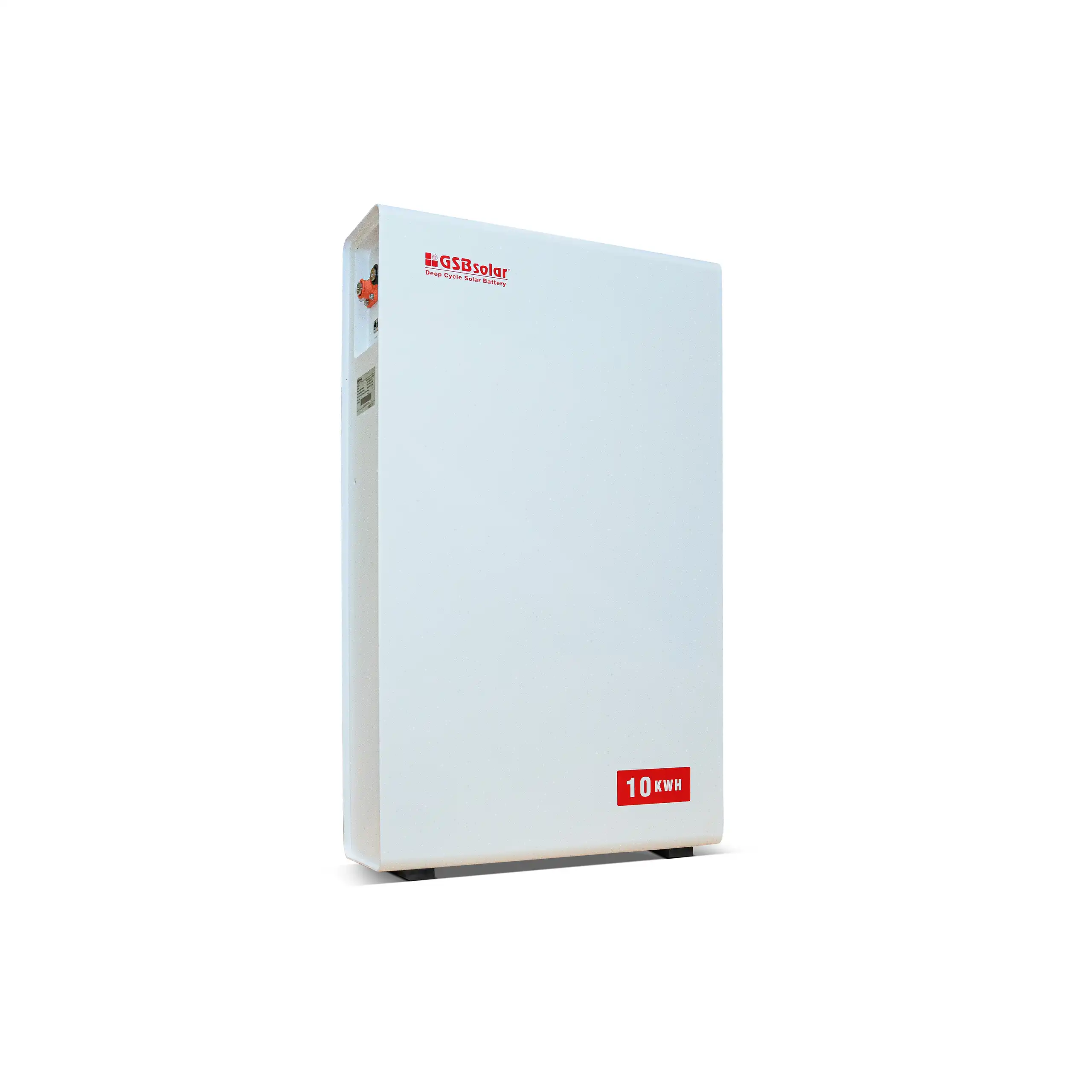
- Lithium Battery
GSB SOLAR LITHIUM BATTERIES
- Gel Battery
- Solar Street Lights
- Pump Inverter
China Best Hybrid Inverter Suppliers for Global Buyers
Choosing a reliable Chinese hybrid inverter supplier requires more than comparing prices or reading attractive product brochures. Buyers must examine conversion efficiency, battery compatibility, protection functions, communication protocols, certifications, and after-sales support. A suitable unit should manage solar generation, battery storage, grid power, and backup loads without creating unnecessary complexity. In real projects, small details matter. Cable terminals, cooling paths, firmware stability, and monitoring accuracy can influence daily performance.
Dr. Matthias Vetter, an energy-storage researcher at Fraunhofer ISE, has described the inverter as “the heart of a photovoltaic system.” This view remains useful when evaluating suppliers. A hybrid inverter is not simply a box between panels and batteries. It is the control center for energy flow, safety responses, and system coordination. Strong manufacturers usually provide clear datasheets, laboratory reports, installation manuals, remote diagnostics, and documented warranty procedures. Independent testing also deserves attention, especially for efficiency claims and battery communication.
Yet no supplier is perfect. Some companies offer excellent hardware but limited local service. Others respond quickly but provide unclear technical documentation. Buyers should ask practical questions about replacement parts, software updates, fault records, and technician training. Factory audits can reveal more than polished websites. A sample order may expose packaging weaknesses or confusing menus. That is not failure; it is evidence for better decisions. This guide compares leading Chinese hybrid inverter suppliers through technical capability, manufacturing experience, certification transparency, customization support, and international service reliability. The goal is not to name one universal winner, but to identify the supplier that fits each project’s actual conditions.
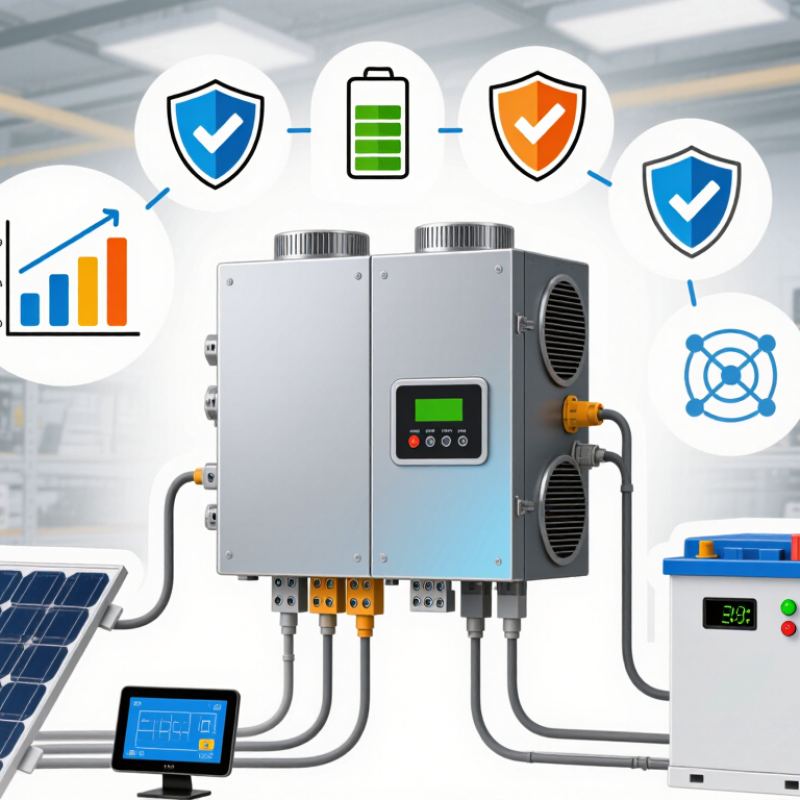
Hybrid inverters connect solar panels, batteries, the grid, and backup loads in one coordinated system.
They convert direct current into usable alternating current. They also manage when energy should be stored, consumed, or exported.
For global energy systems, this flexibility matters. A household can use solar power during the day and stored energy after sunset. A small business can reduce peak-demand charges and maintain essential equipment during outages.
In regions with unstable grids, the inverter becomes a control center, not merely a power converter.
However, performance depends on battery chemistry, local voltage standards, software settings, and installation quality. A strong supplier should provide clear test reports, warranty terms, remote monitoring, and technical support. Certification must match the destination market, not just the manufacturing market.
Tips:
Check round-trip efficiency, surge capacity, operating temperature, and battery compatibility. Ask for real installation data. A showroom specification is not enough.
Buyers comparing Chinese suppliers should examine factory quality procedures, firmware update policies, spare-part access, and response times. Independent testing can reveal differences hidden by similar data sheets.
Installer feedback is especially useful in hot, cold, or humid regions. One practical weakness is often overlooked: advanced controls may confuse untrained users.
Clear manuals and local service partners can prevent costly mistakes. Even careful designs need review, because energy demand rarely follows the neat pattern shown in planning models.
Global buyers should judge hybrid inverter suppliers by evidence, not polished catalog pages. Ask for recent test reports covering efficiency, thermal protection, grid connection, and battery compatibility. Documents should match the exact model and firmware version offered. Check recognized certifications for the destination market, then verify certificate numbers independently.
Factory capability matters too. During an audit, inspect power-module assembly, burn-in testing, calibration records, and final inspection stations. Photos help, but live video or an on-site inspection provides stronger evidence. Ask how suppliers handle component traceability when a batch fails. A clean factory is reassuring, but it does not prove every shipment will be consistent.
Technical fit deserves a written review. Confirm rated power, surge capacity, MPPT voltage range, operating temperature, and protection functions. Request measured performance at partial load, not only the attractive peak-efficiency figure. Test battery communication, generator interfaces, and smart-meter connections with the intended system. Small mismatches can cause large installation delays. An engineering sample is useful, although one sample cannot prove long-term reliability.
Supplier reliability also appears after the sale. Review warranty terms, spare-parts availability, remote diagnostics, response times, and technician training. Clarify replacement freight and firmware-update procedures. Low prices deserve questions. A supplier may offer strong hardware but weak documentation, or excellent support but inconsistent delivery. That contradiction should remain visible during purchasing decisions.
China Best Hybrid Inverter Suppliers for Global Buyers
Leading China-based hybrid inverter suppliers are attracting international buyers as solar-plus-storage expands. The International Energy Agency reported that global renewable capacity additions reached nearly 510 GW in 2023. Solar power represented most new capacity. IRENA also recorded about 473 GW of renewable additions that year. These figures strengthen demand for reliable hybrid inverters, especially in regions facing unstable grids and rising electricity costs.
Practical sourcing requires more than comparing wattage and price. Experienced buyers should check conversion efficiency, surge capacity, battery voltage ranges, cooling design, and monitoring functions. Compliance with IEC 62109, IEC 62116, and local grid codes matters. Factory audits can reveal weak testing processes. Ask for temperature-cycle records, enclosure ratings, firmware procedures, and documented warranty response times. A low quotation may hide integration costs. This is often overlooked.
Tips: Request a complete datasheet, test report, sample unit, and compatibility list before signing. Confirm whether the supplier supports local installers and spare-part delivery. Check performance under heat, dust, and partial shading. A laboratory rating is not a field guarantee. Buyers should also review independent certifications through accredited databases. One imperfect point remains: product quality can vary between production batches, even within one supplier. Continuous inspection is safer than trusting a first shipment.
This chart compares nominal residential grid voltages in major international buyer markets. China-based hybrid inverter suppliers should provide region-specific grid profiles, protection settings, and certification support because voltage requirements differ between markets. Actual installation conditions may vary, so buyers should always confirm local electrical codes before selecting an inverter.
Global buyers assessing China’s hybrid inverter suppliers should verify evidence, not polished claims. IRENA’s Renewable Capacity Statistics 2024 reports 473 GW of renewable capacity added worldwide in 2023, increasing pressure on inverter reliability. IEC 62109-1 and IEC 62109-2 address inverter safety, while the IEC 61000 series supports electromagnetic compatibility testing. Certificates should show model numbers, test scope, laboratory identity, and validity dates. Small details matter.
A credible factory uses incoming inspection, automated end-of-line testing, and calibrated instruments. Ask for sampling plans, failure-rate records, firmware control logs, and corrective-action reports. The IEA’s Renewables 2024 analysis says solar PV represented about three-quarters of renewable capacity additions in 2023. This growth makes repeatable quality more important than a low quotation. Yet quality systems can still fail. A factory may pass a type test but ship units with loose terminals or inconsistent settings. Independent pre-shipment inspection, witnessed load tests, and serial-number traceability reduce that gap.
Export support should cover grid-code mapping, installation manuals, remote commissioning, spare parts, and response times. For battery-linked systems, request applicable transport documents and UN 38.3 test evidence from the battery supplier. Verify local requirements before shipment. Reliable suppliers provide a document index, bilingual labels, packing photos, and clear warranty exclusions. Buyers should also check after-sales capacity through ticket examples or reference projects. Do not accept “global compliance” without destination-specific proof. That phrase is too broad.
| Verification Dimension | Typical Requirement or Industry Reference | ||
|---|---|---|---|
| Product Safety Certification | Applicable certificates should match the destination market, product model, rated voltage, and revision level. Common requirements include IEC-based safety testing and national market approvals. | A complete certificate, test report, model list, certificate holder, issuing body, validity period, and stated standards. | Check the certificate directly through the issuing organization where an online database is available. Confirm that the exact inverter model and rated configuration are covered. |
| Grid-Connection Compliance | Grid-tied and hybrid systems generally require compliance with the destination country’s grid-code requirements, including anti-islanding, voltage, frequency, and reconnection behavior. | Grid-code test reports, protection-setting ranges, firmware version, and a list of supported countries or utility requirements. | Compare the report with the local utility or regulator requirements. Ask for confirmation that the tested firmware matches the production firmware. |
| Electromagnetic Compatibility | The inverter should demonstrate electromagnetic emissions and immunity performance under the applicable EMC standards for power-conversion equipment. | EMC test report identifying the product model, test configuration, laboratory, test dates, and pass results. | Review the report scope and test conditions. Check that optional communication modules and accessories do not invalidate the stated configuration. |
| Factory Quality Management | A documented quality-management system should control incoming materials, production processes, final inspection, nonconformities, and corrective actions. | Quality-management certificate, factory audit report, process flow chart, inspection plan, and corrective-action records with confidential details removed. | Confirm the certificate’s legal entity, factory address, scope, and validity. Use an independent factory audit for high-value or recurring orders. |
| Incoming Material Control | Critical components such as power semiconductors, capacitors, relays, connectors, fans, and communication boards should be traceable to approved suppliers and lots. | Approved-vendor list, incoming inspection standards, sampling records, component certificates, and batch traceability procedure. | Select random production units and trace key components backward to the purchase lot and inspection record. Confirm that substitutions require formal approval. |
| Production Testing | Every finished inverter should undergo documented electrical and functional tests rather than relying only on sample inspection. | End-of-line test checklist covering insulation, grounding, startup, output stability, protection functions, communication, and charging or discharging operation. | Request anonymized test records from recent batches and observe a live production test during a factory audit or pre-shipment inspection. |
| Burn-In and Reliability Testing | Reliability programs commonly include temperature cycling, high-temperature operation, humidity exposure, vibration, surge, and protection-function testing appropriate to the design. | Reliability test plan, test duration, environmental conditions, sample quantity, failure criteria, and corrective-action results. | Check whether tests were performed on the current hardware and firmware revision. Distinguish internal engineering tests from independent laboratory tests. |
| Power and Efficiency Data | Published ratings should clearly distinguish continuous output, peak or surge output, photovoltaic input limits, battery voltage range, and operating temperature range. | Current datasheet, efficiency curve, European or weighted efficiency where relevant, derating curve, and test conditions. | Compare the datasheet with the test report and physical nameplate. Confirm whether advertised peak power is time-limited and whether temperature derating applies. |
| Battery Compatibility | The inverter should specify supported battery chemistry, voltage range, charge and discharge current, communication protocol, and approved battery configurations. | Battery compatibility list, communication protocol document, wiring diagram, protection settings, and commissioning procedure. | Confirm compatibility for the exact battery model and firmware. Verify that open-loop operation does not remove required safety protections or warranty coverage. |
| Protection Functions | Relevant protections may include overvoltage, undervoltage, overcurrent, short circuit, overheating, ground fault, reverse polarity, anti-islanding, and surge protection. | Protection-function matrix, trip thresholds, response times, reset behavior, and test records for each supported operating mode. | Review the protection settings against local installation rules. Request witnessed demonstrations for critical protections before mass production. |
| Firmware and Remote Monitoring | The monitoring platform should provide operating status, alarms, energy data, firmware control, user permissions, and a defined data-retention or service policy. | Monitoring-platform manual, cybersecurity policy, firmware release process, alarm list, API information if available, and data-hosting location. | Test the platform with a demonstration unit. Confirm account ownership, remote-update permissions, data export options, and support after the warranty period. |
| Warranty and Service Terms | A commercial warranty should state duration, covered defects, exclusions, response time, replacement procedure, labor responsibility, and transport obligations. | Signed warranty policy, service-level agreement, spare-parts policy, return-material authorization process, and escalation contacts. | Request written answers to failure scenarios, including DOA units, repeated faults, discontinued models, and warranty claims outside the supplier’s home country. |
| Spare Parts Availability | Long-term projects require access to commonly replaceable parts such as fans, communication devices, covers, connectors, fuses, and control boards where repair is supported. | Spare-parts catalog, recommended stock list, lead times, pricing validity, repair instructions, and product-obsolescence policy. | Evaluate the supplier’s stated availability period and request a spare-parts quotation for the intended project quantity and service horizon. |
| Export Documentation | International shipments normally require accurate commercial invoices, packing lists, transport documents, product descriptions, customs codes, and origin information. | Sample export document set, packaging specifications, product gross and net weights, dimensions, customs classification, and country-of-origin statement. | Have the importer or customs broker review the documents before shipment. Ensure the model, quantity, declared value, and package count are consistent. |
| Packaging and Transportation | Packaging should protect the inverter against shock, vibration, moisture, electrostatic discharge, and incorrect lifting during sea, air, rail, or road transport. | Packaging drawings, drop or vibration test records where applicable, pallet configuration, moisture protection method, and handling labels. | Inspect a packed sample before shipment. Photograph the packaging, serial-number labels, pallet condition, and container loading arrangement. |
| Factory and Product Traceability | Each unit should have a unique serial number linked to its production date, hardware revision, firmware, test results, and shipment record. | Serial-number format, traceability database procedure, production-batch record, and sample unit history. | Select random serial numbers from finished goods and verify that the supplier can retrieve corresponding test and shipment information. |
| Pre-Shipment Inspection | Inspection should confirm quantity, model, accessories, nameplate details, appearance, packaging, and a representative sample of electrical functions. | Inspection checklist, acceptance criteria, sampling level, photographs, test results, and signed inspection report. | Use an independent inspection company or an agreed buyer inspection procedure before releasing the balance payment. |
| Commercial and Technical Transparency | Quotations should separate product price, accessories, software or monitoring charges, delivery terms, tooling, certification costs, and after-sales service conditions. | Detailed quotation, technical deviation list, Incoterms rule and named place, production lead time, minimum order quantity, and payment schedule. | Compare the quotation with the final purchase contract and approved specification. Record all deviations and obtain written approval before production. |

Selecting a hybrid inverter supplier requires more than comparing factory prices. Your market may need different grid standards, certifications, and communication protocols. Confirm these requirements before requesting a formal quotation.
Ask for test reports, warranty terms, production capacity, and documented export experience. A reliable supplier should explain battery compatibility, peak power limits, and protection functions clearly. Request samples or a pilot order when the project is unfamiliar. A controlled test can reveal heat buildup, display errors, or unstable software communication.
Inspect the supplier’s technical response, not only its sales speed. Can engineers provide wiring diagrams and firmware procedures? Can they support remote troubleshooting across time zones? These details matter when an inverter stops working during a rainy week in a remote installation.
Review the factory’s quality process. Check incoming component inspection, burn-in testing, and final performance records. Ask how serial numbers are tracked. Also examine packaging, spare parts, and replacement timelines. A strong supplier should identify risks instead of promising perfect results.
No supplier scores perfectly. A lower price may hide limited after-sales support or changing component quality. I would not approve a supplier from brochures alone. A spreadsheet helps, but it cannot show how patiently a technical team handles a failed field test. Keep written agreements precise, especially for efficiency targets, delivery dates, software access, and warranty responsibilities.