ALL PRODUCTS
- Solar Panel
- Hybrid Inverter
- Lithium Battery
GSB SOLAR LITHIUM BATTERIES
- Gel Battery
- Solar Street Lights
- Pump Inverter
Global demand for durable Fence Posts is rising with agricultural expansion, transport projects, livestock management, and residential development. Grand View Research estimates that the global fencing market reached approximately USD 30.7 billion in 2023. Its report projects continued growth through 2030, although market definitions differ across research firms. MarketsandMarkets also forecasts steady expansion, supported by infrastructure investment and stronger demand for corrosion-resistant systems.
China remains a major sourcing base for steel, galvanized, concrete, timber, and composite Fence Posts. Manufacturers benefit from broad material access, established metalworking clusters, and export experience. However, low price alone is a weak buying signal. Wall thickness, coating weight, weld quality, post straightness, and packing design can change total project cost. A post that looks acceptable in a showroom may fail after repeated frost, salt exposure, or livestock impact.
Practical verification matters. Buyers should request factory audit records, material certificates, coating test results, load data, and production samples. ISO 1461 is commonly referenced for hot-dip galvanized coatings, while ASTM and EN specifications may apply to particular projects. The top ten suppliers in this guide are assessed through manufacturing capability, product range, export reliability, quality controls, and responsiveness. Rankings are not absolute. Different climates and installation methods create different winners. That limitation deserves attention. A reliable supplier should explain tolerances clearly, not hide behind impressive photographs. For global buyers, this shortlist is a starting point for disciplined comparison, not a substitute for independent inspection.
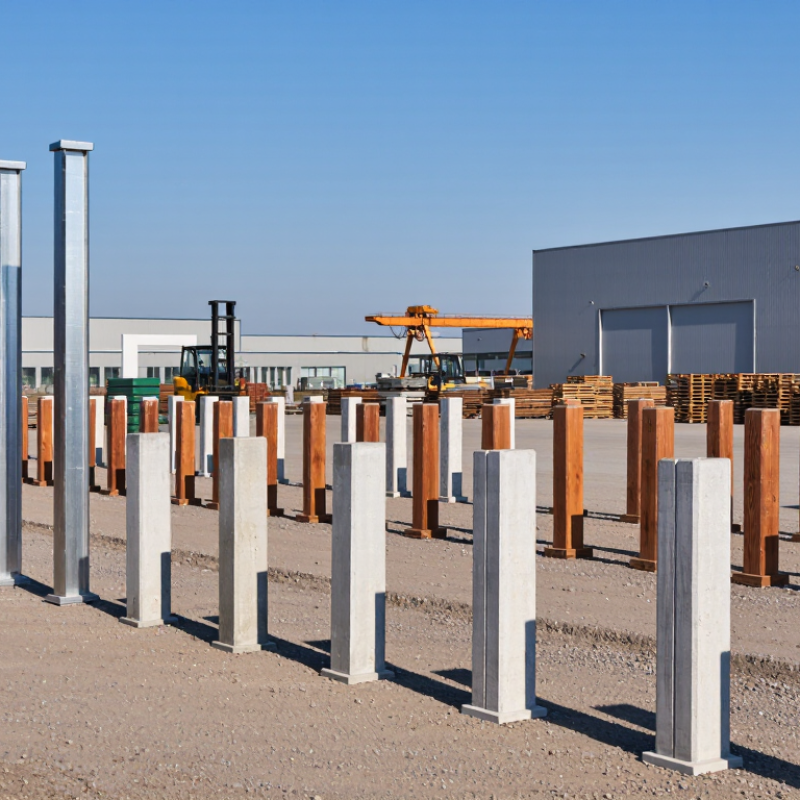
Fence posts are the structural supports that hold fence panels, wire mesh, gates, or privacy boards in place. They transfer wind, impact, and soil pressure into the ground. Common materials include galvanized steel, powder-coated metal, concrete, treated timber, and recycled plastic. Each option suits different conditions. Coastal projects need stronger corrosion resistance, while agricultural fencing may prioritize easy installation and impact tolerance.
Global buyers often source fence posts from China because the manufacturing base offers broad material choices, flexible production, and competitive pricing. Many factories can adjust post thickness, length, hole spacing, surface treatment, and packaging for specific projects. This matters when a buyer needs posts for uneven terrain or mixed fence systems. Large production clusters also support accessory matching, including caps, brackets, bolts, and driving tools.
Experience still matters more than a low quotation. A dependable supplier should provide material details, coating thickness, dimensional tolerances, and relevant test records. Buyers should inspect samples before approving mass production. Factory audits can reveal welding quality, packing methods, and storage conditions. Small details matter. Poor bundling may damage coatings during transport.
China is not automatically the best choice for every project. Shipping distance, import duties, and after-sales communication can change the final cost. Some specifications may also be misunderstood between drawings and production samples. That weakness deserves attention. Clear technical files, staged inspections, and written acceptance standards make the purchasing process more reliable.
Fence posts are vertical structural components used to support fencing systems, gates, wire mesh, agricultural barriers, and security panels. The following comparison presents ten common Chinese manufacturing profiles ranked by export suitability, material range, customization capability, and production scalability. Figures are typical buyer-oriented specifications and should be confirmed during quotation and pre-shipment inspection.
| Rank | Manufacturer Profile | Main Production Area | Primary Fence Post Types | Typical Materials | Common Sizes | Corrosion Protection | Typical MOQ | Typical Lead Time | Relevant Standards |
|---|---|---|---|---|---|---|---|---|---|
| 1 | High-volume steel post producer | North China | T-posts, U-posts, Y-posts | Low-carbon steel | 1.2–2.4 m; 1.25–3.0 kg/m | Hot-dip galvanizing or powder coating | 1–5 metric tons | 20–35 days | ASTM A702, ASTM A123, ISO 1461 |
| 2 | Welded tubular post producer | East China | Round, square, and rectangular hollow posts | Carbon steel and galvanized steel | 38–114 mm diameter; 1.5–3.5 m | Zinc coating, zinc-rich primer, or powder coating | 100–300 pieces | 25–40 days | ASTM A500, EN 10219, ISO 1461 |
| 3 | Roll-formed agricultural post producer | Central China | C-channel, U-channel, and vineyard posts | Galvanized sheet steel | 30–80 mm profile width; 1.5–2.8 m | Pre-galvanized coating, commonly Z180–Z275 | 2–10 metric tons | 20–35 days | ASTM A653, EN 10346, ISO 1461 |
| 4 | Heavy-duty security post producer | North China | Security fence posts and anti-climb system posts | Structural carbon steel | 60–120 mm diameter; 2.0–4.0 m | Hot-dip galvanizing, polyester powder coating | 100–500 pieces | 30–45 days | EN 10210, EN 10219, ISO 1461 |
| 5 | Stainless-steel post producer | East China | Architectural, coastal, and hygienic fencing posts | 304 or 316 stainless steel | 38–100 mm diameter; 0.8–3.0 m | Mill finish, brushed finish, or electropolishing | 50–200 pieces | 30–50 days | ASTM A240, ASTM A554, EN 10088 |
| 6 | PVC and composite post producer | South China | Vinyl, PVC-coated, and composite posts | uPVC, HDPE, fiberglass, and recycled composite | 50–150 mm profile width; 1.2–3.0 m | UV stabilizers, colored polymer, or co-extrusion | 300–1,000 pieces | 25–45 days | ASTM F964, ASTM D1784, EN 15534 |
| 7 | Agricultural and livestock post producer | Northwest China | Welded wire, cattle, sheep, and electric-fence posts | Steel, fiberglass, and reinforced polymer | 0.8–2.2 m; 8–25 mm diameter | Galvanizing, enamel coating, or UV-resistant polymer | 500–2,000 pieces | 20–35 days | ASTM A641, ASTM F1043, EN 10244 |
| 8 | Decorative and residential post producer | South China | Picket, garden, ornamental, and gate posts | Mild steel, aluminum, and cast aluminum | 25–100 mm profile width; 0.6–2.4 m | Powder coating, anodizing, or liquid paint | 100–500 pieces | 25–45 days | ASTM B221, AAMA 2603–2605, ISO 12944 |
| 9 | Concrete and precast post producer | Central and Southwest China | Precast concrete, utility, and agricultural posts | Reinforced concrete and prestressed concrete | 80–150 mm width; 1.8–3.0 m | Dense concrete cover and weather-resistant admixtures | 100–500 pieces | 30–60 days | ASTM C94, ASTM C150, EN 206 |
| 10 | Custom OEM fence post producer | Multiple Chinese industrial regions | Project-specific posts, brackets, sleeves, and complete systems | Steel, stainless steel, aluminum, and composite materials | Custom drawings; commonly 0.6–4.0 m | Galvanizing, powder coating, anodizing, or multi-layer systems | 100–1,000 pieces | 35–60 days | Project specification, ASTM, EN, ISO, or local code |