10 Solar Warehouse Buying Tips for Global Buyers

Solar purchasing is no longer only a price comparison exercise. A reliable solar warehouse must support product quality, traceability, safe handling, and predictable international delivery. Global buyers now face more choices, faster technology changes, and greater pressure to protect project schedules.

According to the International Renewable Energy Agency’s Renewable Capacity Statistics 2024, the world added about 473 GW of renewable capacity in 2023. Solar contributed approximately 346 GW, representing nearly three quarters of new renewable capacity. This growth creates strong demand for modules, inverters, batteries, mounting systems, and related components. It also increases the risk of rushed procurement decisions.

Details matter.

A warehouse may look organized, yet humidity can damage packaging, poor pallet spacing can increase breakage, and unclear batch records can complicate warranty claims. The International Energy Agency continues to identify solar PV as a major driver of global renewable expansion. However, market growth does not guarantee dependable suppliers or consistent product quality.

This guide, “10 Solar Warehouse Buying Tips for Global Buyers,” focuses on practical checks before payment and shipment. It examines inventory visibility, certification documents, storage conditions, packaging, inspection procedures, delivery terms, and after-sales support. Buyers should also compare real operating evidence, not just polished websites or attractive quotations.

Some recommendations may seem overly cautious. They probably are. Yet one damaged container, missing test report, or misunderstood Incoterm can cost more than a small unit-price saving. Professional sourcing requires patience, documented questions, and independent verification. The best solar warehouse is not necessarily the largest. It is the one that can prove what it stores, how it protects products, and whether it can deliver consistently across borders.

10 Solar Warehouse Buying Tips for Global Buyers

Define Your Solar Warehouse Requirements and Purchasing Goals

10 Solar Warehouse Buying Tips for Global Buyers

Define Your Solar Warehouse Requirements and Purchasing Goals

Before contacting suppliers, define what the warehouse must support. Is it for rooftop systems, utility projects, or regional distribution? Record your target capacity in kilowatts or megawatts. Include module dimensions, inverter types, battery quantities, and expected monthly demand. Small details matter. A warehouse aisle designed for cartons may not suit palletized modules.

Review the physical site carefully. Measure clear height, loading doors, floor strength, ventilation, and temperature ranges. Confirm space for inspection, repacking, and damaged-goods isolation. Moisture control is essential for electrical equipment. Fire protection, worker access, and local storage requirements also need professional review. Do not rely only on a floor plan. Walk the site during loading hours.

Set purchasing goals beyond the lowest unit price. Define acceptable lead times, minimum order quantities, quality inspection steps, warranty documentation, and delivery terms. Ask whether the supplier can provide serial-number records and packing photos. These records improve traceability across borders. I have seen buyers overlook unloading equipment and later face avoidable delays. That mistake is easy to repeat. A spreadsheet can still hide practical problems.

Your plan should also include a realistic cash-flow limit. Separate fast-moving products from project-specific inventory. Keep a small allowance for damaged packaging, replacement parts, and seasonal freight changes. Review the list with an engineer, warehouse manager, and finance professional before placing an order. Their priorities may conflict, but that tension often exposes weak assumptions.

Verify Supplier Credentials, Product Quality, and Industry Compliance

10 Solar Warehouse Buying Tips for Global Buyers

Verify supplier credentials before discussing volume or price.

Request business licenses, factory addresses, ownership details, and recent audit records. A polished certificate file is not proof of manufacturing capability. Call the issuing body when authenticity is uncertain. Check whether the factory actually produces modules, inverters, or mounting systems, rather than only trading them.

Product quality needs measurable evidence.

The IRENA Renewable Capacity Statistics 2024 reported 345.5 GW of new solar capacity in 2023, increasing pressure on supply chains and inspection systems. Ask for serial-level traceability, incoming-material records, and independent test reports.

For modules, review IEC 61215 and IEC 61730 test coverage, including thermal cycling, humidity-freeze, and mechanical-load results. For electrical equipment, confirm applicable safety and electromagnetic compatibility requirements.

Samples should match mass-production specifications. They sometimes do not.

Compliance is market-specific.

The IEA Renewables 2024 report recorded about 510 GW of global renewable capacity additions in 2023, showing why rushed procurement can create hidden risks. Check customs documents, labeling rules, recycling obligations, warranty terms, and grid-connection requirements for the destination country.

ISO 9001 certification can support process control, but it cannot guarantee every shipment. Inspect packaging, connector fit, pallet stability, and moisture protection before loading.

Keep photographic evidence and a signed inspection record. A missed detail can become an expensive lesson.

Compare Solar Panel Specifications, Pricing, and Total Ownership Costs

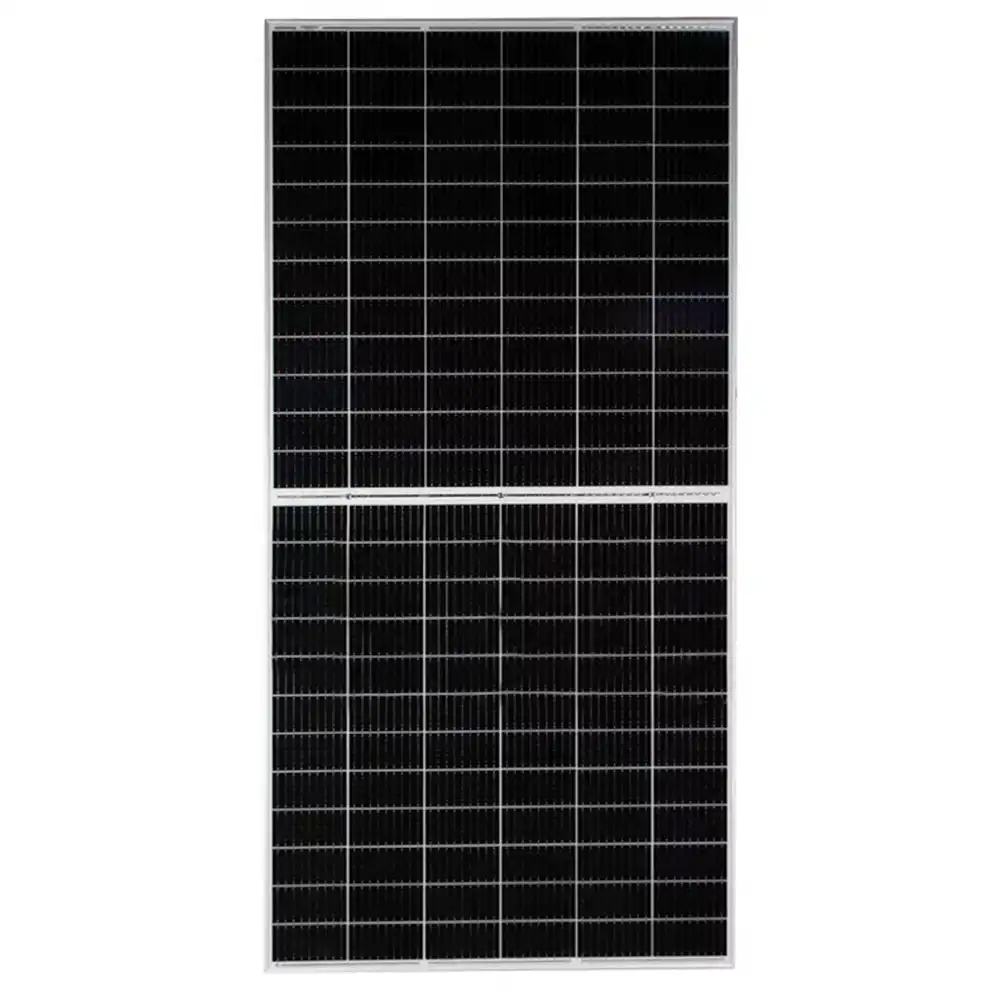
Global solar buyers should compare more than the quoted panel price. A lower invoice can hide weaker output, higher freight, or faster degradation. Request the full datasheet, test reports, warranty terms, and packing details. Check rated power, efficiency, temperature coefficient, dimensions, weight, and connector compatibility. A 550-watt panel may not suit a roof with strict load limits. Measure usable energy, not only the number printed on the carton.

Ask suppliers to separate module, packaging, inland transport, ocean freight, insurance, duties, installation, and replacement costs. Use a landed-cost worksheet for each destination. Include currency changes and port delays. Compare price per watt, then compare expected kilowatt-hours over the operating life. A cheaper panel with poorer low-light performance may produce less energy on cloudy sites. Small losses become expensive across a warehouse roof. Check payment milestones and inspection rights. Independent pre-shipment inspection can catch cracked glass, mixed specifications, or moisture damage. Details matter.

Reliability needs evidence. Review third-party test results and production quality records when available. Ask how claims are handled across borders, not just how long coverage lasts. A long warranty means little without a reachable service process. I would also model cleaning, monitoring, inverter replacement, and recycling fees. The model will be imperfect. Dust levels, shading, and local labor rates can change the result. Document every assumption and run a conservative scenario. That uncomfortable version may be more useful than an optimistic spreadsheet.

Evaluate Inventory, Packaging, Shipping, and International Logistics

10 Solar Warehouse Buying Tips for Global Buyers

Evaluate Inventory, Packaging, Shipping, and International Logistics

A reliable warehouse should show more than attractive stock numbers. Ask for current inventory records, production dates, electrical specifications, and tested output data. Request batch photos with visible labels and pallet counts. I have found that small stock discrepancies often signal weak warehouse controls. Check whether items are stored indoors, above floor level, and away from moisture. Dust is easy to notice. Humidity damage is not.

Packaging deserves a physical review. Confirm carton strength, corner protection, moisture barriers, and pallet stability. Ask how fragile components are separated during loading. For long routes, standard packaging may fail under repeated handling. A sample drop test can reveal more than a written promise. Still, testing one carton does not represent every shipment. That limitation matters. Require packing lists, commercial invoices, certificates, and serial number records before dispatch.

Shipping plans should match the destination, season, and unloading conditions. Compare container capacity, estimated transit time, port charges, insurance coverage, and delivery responsibilities. Clarify the selected trade term in writing. Do not rely on vague phrases such as “door delivery.” International logistics can change quickly because of port congestion, weather, or customs reviews. Ask for a contingency route and realistic delivery windows. Calculate import duties and local handling costs independently. A low warehouse price can become expensive after storage, demurrage, and inland transport. Keep every approval documented. It protects both sides when details change.

Review Warranties, After-Sales Support, and Long-Term Supply Capacity

Global solar buyers should examine warranty terms before comparing unit prices. A reliable warranty states coverage periods, performance thresholds, exclusions, and claim procedures. Ask whether replacement panels, inverters, or batteries are available locally. Request sample claim forms and response timelines. Vague promises create expensive delays after installation. I once focused too heavily on purchase cost and overlooked freight responsibilities during warranty returns. That mistake affected project scheduling.

After-sales support should include technical training, remote diagnostics, spare-parts planning, and clear escalation contacts. Test the support process before signing. Send a technical question and measure the response quality. Silence is meaningful. Also review the supplier’s production records, quality controls, and capacity expansion plans. A supplier may deliver one container successfully but struggle with twelve containers each month. Ask for audited capacity data, lead-time history, and evidence of stable component sourcing. Confirm whether production can continue during seasonal demand peaks. Long-term supply requires more than a large factory. It depends on consistent quality, transparent communication, and realistic allocation commitments. Forecasts can still be wrong, so include flexible quantities and review points in the contract. A second-source plan is sensible, even when the relationship feels strong. Reliability is built through documented performance, not confident presentations.

10 Solar Warehouse Buying Tips for Global Buyers - Review Warranties, After-Sales Support, and Long-Term Supply Capacity

No. Buying Dimension Suggested Weight Practical Benchmark Documents or Evidence to Request Risk Level if Unverified
1 Product Certification and Compliance 12% The product should comply with the regulations of the destination market and carry current safety and performance certifications applicable to the product category. Valid certificates, test reports, technical datasheets, declarations of conformity, and country-specific import requirements. High
2 Warranty Coverage and Terms 15% Separate the product warranty from the performance warranty. Confirm coverage period, degradation limits, exclusions, labor responsibility, and the process for defective goods. Signed warranty terms, performance-degradation schedule, exclusions, claim forms, and the legal entity responsible for honoring the warranty. High
3 After-Sales Support and Response Time 12% Prefer documented technical support with a defined acknowledgement target of one business day or less and a clear escalation route for urgent failures. Support-service agreement, contact directory, ticketing procedure, spare-parts policy, service-level targets, and sample incident reports. High
4 Long-Term Supply Capacity 14% Assess whether planned capacity is supported by production records, raw-material access, multiple manufacturing lines, and a written allocation plan for future orders. Capacity statement, recent production history, factory audit, delivery performance, allocation policy, and continuity plan for critical components. High
5 Quality-Control and Traceability System 12% Every batch should be traceable to production dates, material lots, inspection results, and serial numbers, with documented incoming, in-process, and final checks. Quality manual, inspection plans, batch records, serial-number format, audit reports, calibration records, and nonconformity reports. High
6 Total Landed Cost 10% Compare the complete landed cost rather than the quoted unit price, including product, packaging, freight, insurance, duties, taxes, inspection, warehousing, and expected replacement costs. Itemized quotation, Incoterms, freight assumptions, customs classification, duty estimate, packaging specification, and payment schedule. Medium
7 Lead Time and Delivery Reliability 10% Set an agreed production and shipping schedule, define acceptable delivery variance, and require advance notice for delays or material changes. Historical on-time delivery data, production schedule, shipping plan, delay-notification procedure, and liquidated-damages terms where appropriate. Medium
8 Packaging, Handling, and Damage Control 7% Packaging should protect products against moisture, vibration, stacking pressure, and handling damage throughout multimodal international transport. Packaging drawings, pallet or crate specifications, loading photos, drop or vibration test records, container-loading plan, and damage-claim procedure. Medium
9 Spare Parts and Product Continuity 5% Confirm the expected availability period for replacement parts, compatible successor products, repair instructions, and minimum recommended inventory for critical components. Spare-parts list, parts pricing, stock policy, product-change notification process, compatibility matrix, and repair manuals. Medium
10 Supplier Financial and Operational Resilience 3% Review operating history, production continuity, insurance, subcontracting controls, and the supplier’s ability to support claims and deliveries during market disruption. Business registration, audited or independently reviewed financial information where available, insurance certificates, risk-assessment results, and business-continuity plan. Medium
Total Evaluation Weight 100% Use the same evidence checklist for every supplier before comparing price and commercial terms.

Note: The suggested weights are procurement-planning benchmarks for international solar warehouse purchases. Buyers should adjust them according to product type, destination-market regulations, project criticality, financing requirements, and shipping conditions.

Facebook X Instagram Pinterest WhatsApp WhatsApp
We use cookies to improve your experience on our website. By browsing this website, you agree to our use of cookies.